October 09, 2026


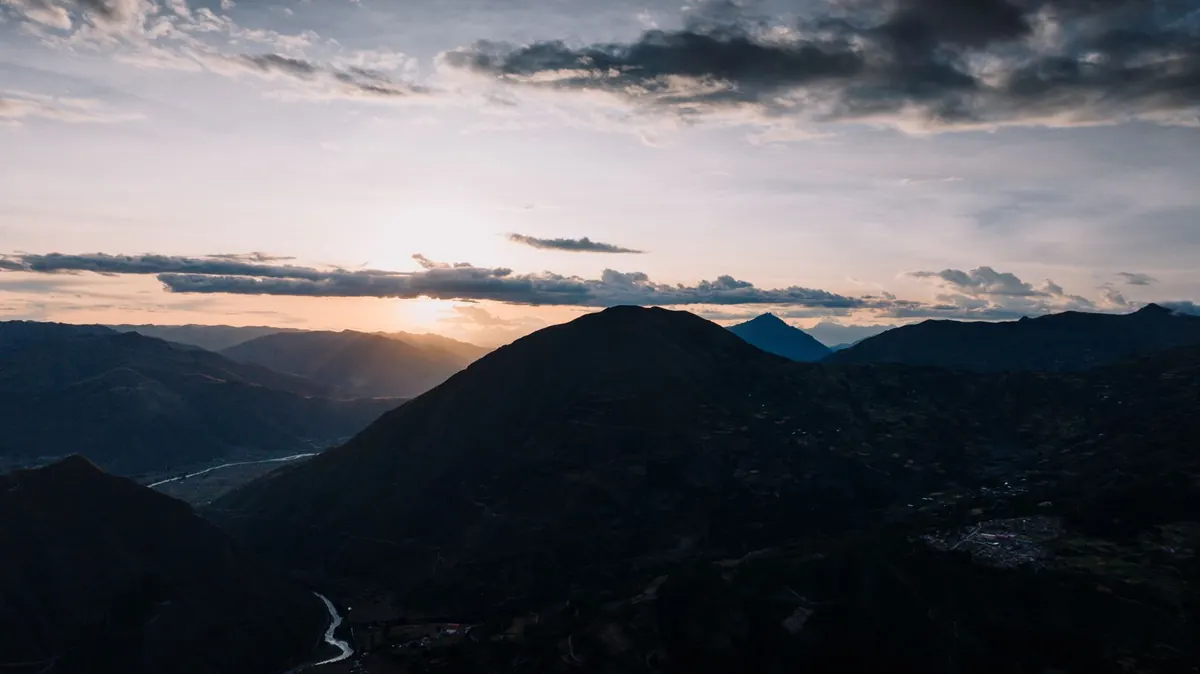
Stand on a valley porch just after sunset and you can feel the shift. The air that was merely warm an hour ago turns cool around the ankles first, then cool everywhere. By nine o'clock the thermometer reads several degrees lower than a ridge a mile away, and by morning there is frost on the grass while the hillside above looks untouched. Nothing mysterious is happening. The valley is doing what valleys do after dark: shedding heat and collecting the cold air it makes.
All day, the ground soaks up sunlight and passes some of that warmth to the air above it. Sunset reverses the flow. The ground radiates its heat upward, and it does so most efficiently when the sky is clear, the air is dry and the wind is light. Clouds act a little like a blanket, sending some of that outgoing energy back down. Water vapour does similar work. A calm night removes the last defence, because still air does not stir warm and cool layers together.
Watch your own car for proof. On a cold, clear night, frost often forms first on the roof and windshield — the surfaces angled toward open sky — while the doors and the shaded side stay clear longer. Grass behaves the same way, which is why the first frost of autumn usually shows up on the lowest, flattest part of the lawn rather than the strip next to the house.
A useful rule of thumb: clear sky, dry air, light wind, bare ground and a long night together produce the sharpest drop. Add snow on the ground and the effect strengthens, because a bright snowpack radiates heat away very effectively. A breezy, cloudy night does the opposite, and many valley residents wake to find the thermometer barely moved.
Cold air is denser than warm air. When the air touching a hillside cools, it grows heavier and slides down the slope, gathering in gullies and creek bottoms the way water does after rain — except that you cannot see it moving. This is cold-air drainage, and it explains much of what feels odd about valley evenings.
The flow follows the shape of the land:
Drainage is slow. It is not a rush of wind but a quiet creep of air, and you may notice it only as a chill around your ankles while your head and shoulders stay comfortable. Standing still, you feel it more than walking.
Normally, air gets cooler as you climb. On many valley nights that pattern flips. Cold, dense air pools on the floor while warmer air sits on top of it — a temperature inversion. A slope a few hundred feet above the valley floor can run several degrees warmer than the town below, which is why hillside orchards and mid-slope homes sometimes escape frosts that hit the bottom of the valley.
Inversions have side effects. Smoke from woodstoves and chimneys stays low instead of rising away, so a still winter evening can smell like a campsite. Fog forms more readily, and valley fog can linger well past sunrise while the ridge above sits in full sun. Air quality suffers too, because the same lid that traps cold air also traps exhaust and fine particles.
Sunrise does not end an inversion immediately. The sun has to warm the ground enough to break the stable layer, and in deep valleys with low winter sun that can take until mid-morning. Until then, the coldest part of the day may arrive an hour or two after dawn rather than at first light.
Two properties a mile apart can differ by several degrees on the same night, and it usually comes down to three things: height above the valley floor, drainage, and what is on the ground.
Walk your place on a frosty morning and the pattern will show itself. The low corner of the field, the dip at the end of the driveway, the mown flat by the creek — those are frost hollows, and they will be first nearly every time. Gravel and bare soil shed heat differently than moist soil, and moist soil holds warmth longer, which is why a well-watered garden often comes through a light frost better than a dry one.
You do not need equipment to guess how cold the night will go. A quick look outside after dark tells you most of it.
Most of the work happens in the afternoon, not at bedtime.
A valley evening is not a smaller version of the day. It is a different place, and once you know how the cold air moves through it, you can dress for it, garden around it and enjoy it. If cold-weather exposure, heating equipment or air quality is a concern for you or someone in your household, talk to a qualified professional rather than guessing.
Photo: K / Pexels

Stories and insights from the valley.
Copyright © 2026 Vale Column. All rights reserved. Vale Column.